
Syracuse Deed Records
Deed records for properties in Syracuse are kept by the Onondaga County Clerk. The city does not record deeds. Syracuse is the county seat and the fifth most populous city in New York State. Property records in Onondaga County go back to 1794, so title searches here can trace ownership through more than two centuries of land transfers. Whether you need to look up a deed for a home purchase, check for liens, or research past owners, the County Clerk's Office is the place to start.
Syracuse Quick Facts
Where Syracuse Deed Records Are Filed
All deed records for Syracuse go through the Onondaga County Clerk's Office. This is true for every city and town in the county. New York State law puts deed recording at the county level, not with city or town clerks. The Syracuse City Clerk handles things like Common Council minutes, local permits, and vital records. But deeds, mortgages, liens, and land records belong to the County Clerk.
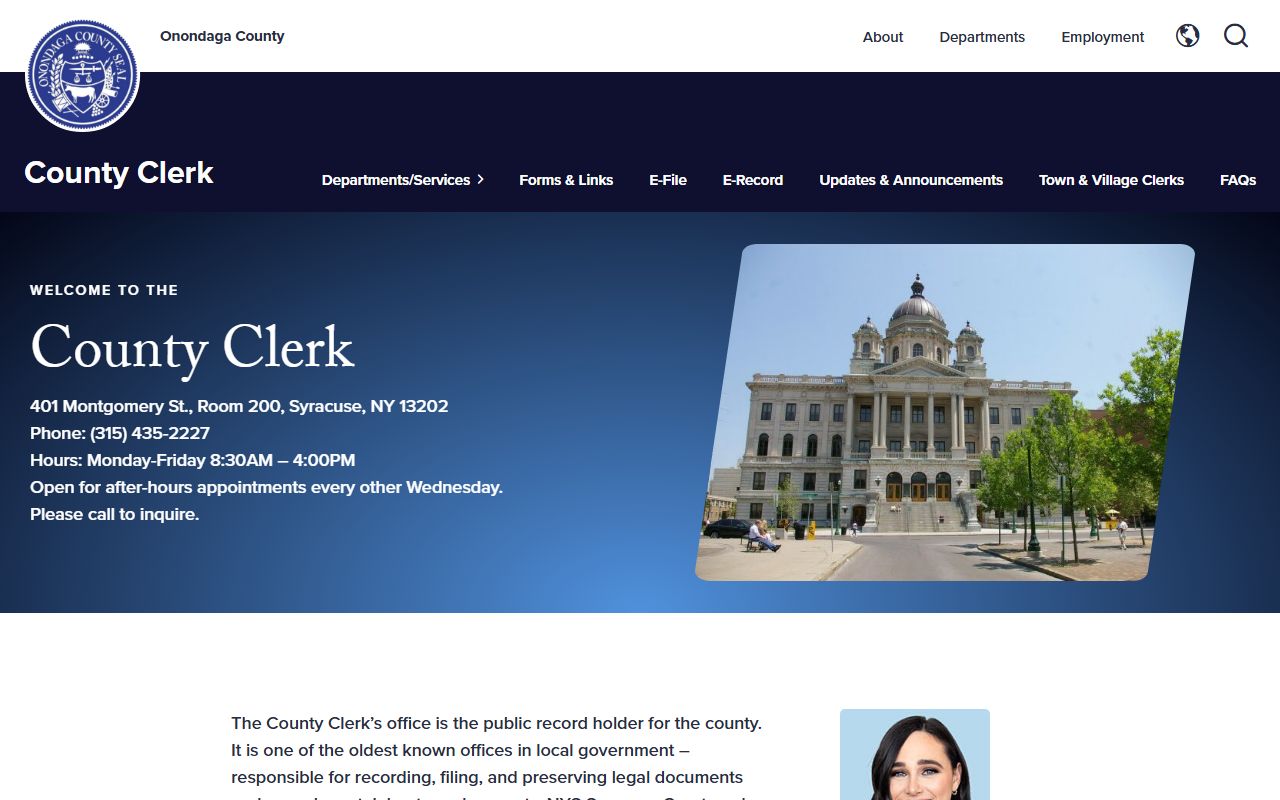
The Onondaga County Clerk's Office sits at 401 Montgomery Street, Room 200, in downtown Syracuse. You can reach them by phone at (315) 435-2227. Hours are Monday through Friday, 8:30 AM to 4:00 PM. The office closes on the first Tuesday of each month from 10:30 to 11:00 AM for staff meetings. After-hours appointments are offered every other Wednesday for people who can't come during the day.
Onondaga County Clerk Deed Records
| Office | Onondaga County Clerk |
| Clerk | Emily E. Bersani |
| Location | 401 Montgomery Street, Room 200, Syracuse, NY 13202 |
| Phone | (315) 435-2227 |
| Hours | Monday - Friday, 8:30 AM - 4:00 PM |
| Records Span | 1794 to present |
County Clerk Emily E. Bersani runs the office. Her staff handles all deed and mortgage filings for Onondaga County. The Mortgages and Deeds Department keeps an unbroken chain of title going back to 1794. That means you can trace who owned a piece of land in Syracuse for over 230 years, as long as you know at least one prior owner's name to start your search.
How to Search Deed Records in Syracuse
You have a few ways to find deed records for Syracuse properties. The most common is to visit the Onondaga County Clerk's website and use their online search tools. You can look up records by name, property address, or document type. The online system covers modern records, and older records may need an in-person visit.
For in-person searches, go to the Clerk's Office at 401 Montgomery Street. Staff can help you find specific deeds and guide you through the index books. Bring the property address or the names of past owners to speed up the process. The office also keeps microfilm and bound books for older records that haven't been digitized yet.
Title companies and attorneys in Syracuse use these same resources when doing title searches before a real estate closing. If you are buying or selling a home, your attorney will pull the deed history from the County Clerk to make sure the title is clear.
Deed Recording Fees
Recording a deed in Onondaga County costs a base fee of $45.50. Each page of the deed is $5.00. The County Clerk generates a cover page, which is included in the base fee. If your deed has a cross-reference to another document, add $0.50 per reference.
Transfer tax is $4.00 per thousand dollars of the sale price. So on a $200,000 home, the transfer tax would be $800. There is also a mansion tax of 1% on residential sales of $1 million or more. You must pay these taxes at the time of recording, or the Clerk will not accept the deed.
Along with the deed itself, you need to file Form RP-5217 and Form TP-584. The RP-5217 is a barcoded PDF that must be filled out in Adobe Acrobat. Handwritten forms will be sent back. These forms capture the sale price, property use code, and other details the state needs for tax and assessment tracking.
Syracuse City Clerk vs. County Clerk
People sometimes go to the wrong office. The Syracuse City Clerk does not have deed records. That office deals with Common Council meeting minutes, local permits, licenses, and vital statistics like birth and death records. If someone at the City Clerk's office gets asked about deeds, they will point you to the County Clerk down the road.
This is a common mix-up across New York State. Every city and town has its own clerk, but none of them record deeds. That job always falls to the county. In Syracuse's case, the County Clerk's Office is right in the city, which makes it easy to get to.
Property Tax and Assessment Records
The Onondaga County Real Property Tax Service is at 421 Montgomery Street, 15th Floor, in Syracuse. You can reach them at (315) 435-2426. This office keeps assessment rolls, tax maps, and property data. While they don't hold deeds, their records are useful when you need a parcel number or want to check the assessed value of a property before searching the Clerk's records.
New York also runs the Municipal Data Portal, which shows 10 years of property sales statewide (except New York City). The Sales Web tool pulls data from RP-5217 forms filed with each deed, so you can see recent sale prices for Syracuse properties without visiting the Clerk's Office.
Mortgage Recording in Onondaga County
Mortgages are also recorded at the County Clerk's Office. The base fee to record a mortgage is $45.50 plus $5.00 for the cover page, with $5.00 for each extra page. The mortgage recording tax in Onondaga County is 1% of the loan amount. For one- and two-family homes, the first $10,000 of the mortgage is exempt from the additional tax, which saves borrowers a small amount at closing.
Mortgage discharges and assignments also get filed here. When a homeowner pays off their mortgage, the lender should file a satisfaction document with the County Clerk. If that doesn't happen, it can cause problems the next time you try to sell.
Legal Framework for Deed Records
New York Real Property Law sets the rules for how deeds must be written, signed, and recorded. A valid deed needs the names of the grantor and grantee, a legal description of the property, the grantor's signature, and notarization. Recording the deed with the County Clerk puts the public on notice that a property has changed hands. If you skip recording, the deed is still valid between buyer and seller, but a later buyer who records first could claim they own it.
The New York State Senate legislation page lets you search current bills that might change property recording rules. Staying aware of new laws helps you avoid issues when filing documents in Onondaga County.
Nearby Cities
Clay is also in Onondaga County and uses the same County Clerk for deed records. Other nearby communities like Cicero, Dewitt, and Manlius file their deeds with the Onondaga County Clerk as well.