
Search New York Deed Records
New York deed records are public documents kept by County Clerks in all 62 counties. You can search for deeds, mortgages, and other land records online or in person at the clerk's office where the property sits. Each county holds its own set of records going back decades and in some cases centuries. New York City works under a different setup for four boroughs, using the ACRIS system from the Department of Finance. Staten Island is the one exception in NYC, where the Richmond County Clerk keeps deed records at the County Clerk's Office instead. Start your search by picking the right county or city below.
New York Deed Records Overview
Where to Find New York Deed Records
In New York, the County Clerk is the official keeper of deed records. This is the case in all 62 counties. The clerk records deeds, mortgages, liens, judgments, and other documents that affect real property under New York Real Property Law. When a property changes hands, the new deed goes to the County Clerk for recording. Once filed, it becomes part of the permanent public record. Anyone can request a copy.
Most County Clerk offices let you search deed records in person during business hours. Walk in, give the clerk a name or property details, and they pull up what they have. Many counties now run online search portals too. Some are free to browse with guest access. Others charge a small fee to view or print document images. The level of online access varies quite a bit from one county to the next, with some offering records back to the 1800s and others covering only the last few decades.
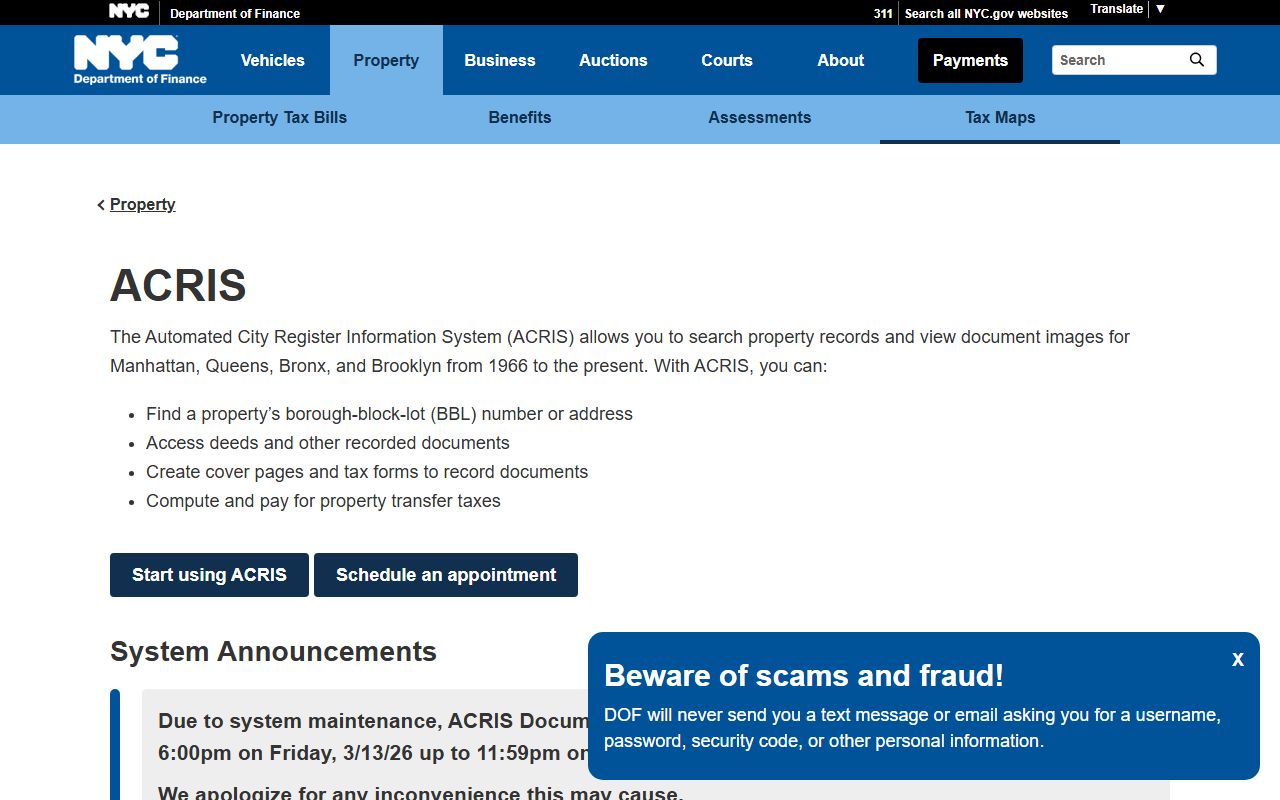
New York City has a different structure. Manhattan, Brooklyn, Queens, and the Bronx use the Automated City Register Information System, known as ACRIS. This free tool from the NYC Department of Finance lets you search property records back to 1966 by address, block and lot number, party name, or document type. Staten Island does not use ACRIS. The Richmond County Clerk maintains deed records for that borough and has them available online back to 1945. This makes Richmond County the only borough where the County Clerk handles deed recordings rather than the City Register.
How to Search Deed Records Online
Several online tools give you access to New York deed records. The best place to start depends on where the property is.
For NYC properties, ACRIS is the primary resource. It covers four boroughs. You can search for free without creating an account. Document images are available at no charge. The system lets you search by property address, borough, block and lot number, party name, document type, or document ID number. ACRIS also handles recording of new documents for Manhattan, Brooklyn, Queens, and the Bronx.
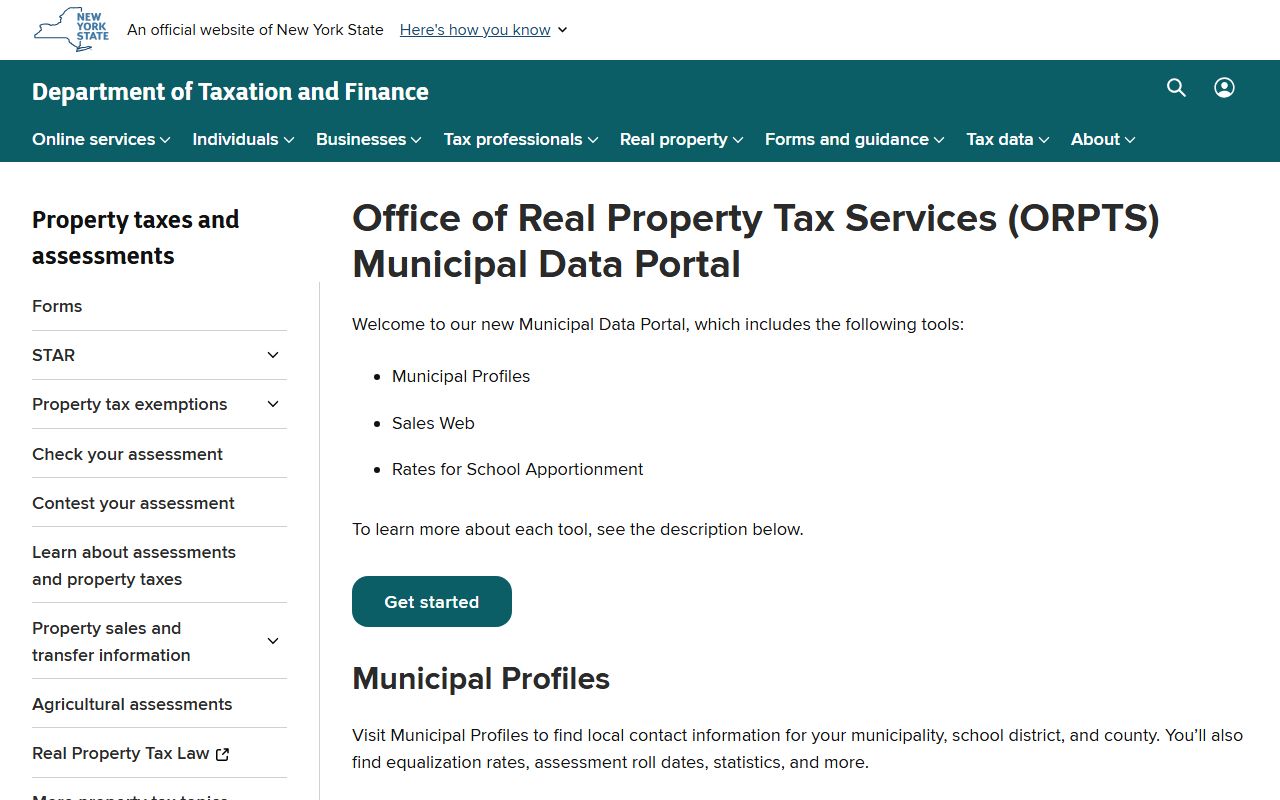
Outside New York City, the state runs the Municipal Data Portal with a tool called Sales Web. It tracks 10 years of property sales and transfers for all of New York except NYC. The Department of Taxation and Finance updates this data every week as local clerks transmit new recordings. You can search by county, municipality, and date range, then download the results. The source of this data is Form RP-5217, the Real Property Transfer Report that must be filed with every deed.
Individual counties also run their own search systems. Monroe County uses Tapestry by Fidlar for records from 1984 to present. Erie County has a public records search portal at their clerk's website. Nassau County offers a Land Records Viewer for searching by address or section, block, and lot. Several counties use the IQS platform, including Oneida, Orange, Sullivan, Warren, and Washington counties. Clinton and Rockland counties use Cott Systems for their online records. Each county sets its own pricing for online access, so check the specific county's portal for costs.
Recording a Deed in New York
Recording a deed in New York means filing it with the County Clerk where the property sits. The clerk stamps the deed with a recording date and assigns it a book and page number or instrument number. This step gives public notice of the ownership change and protects the new owner's interest in the property.
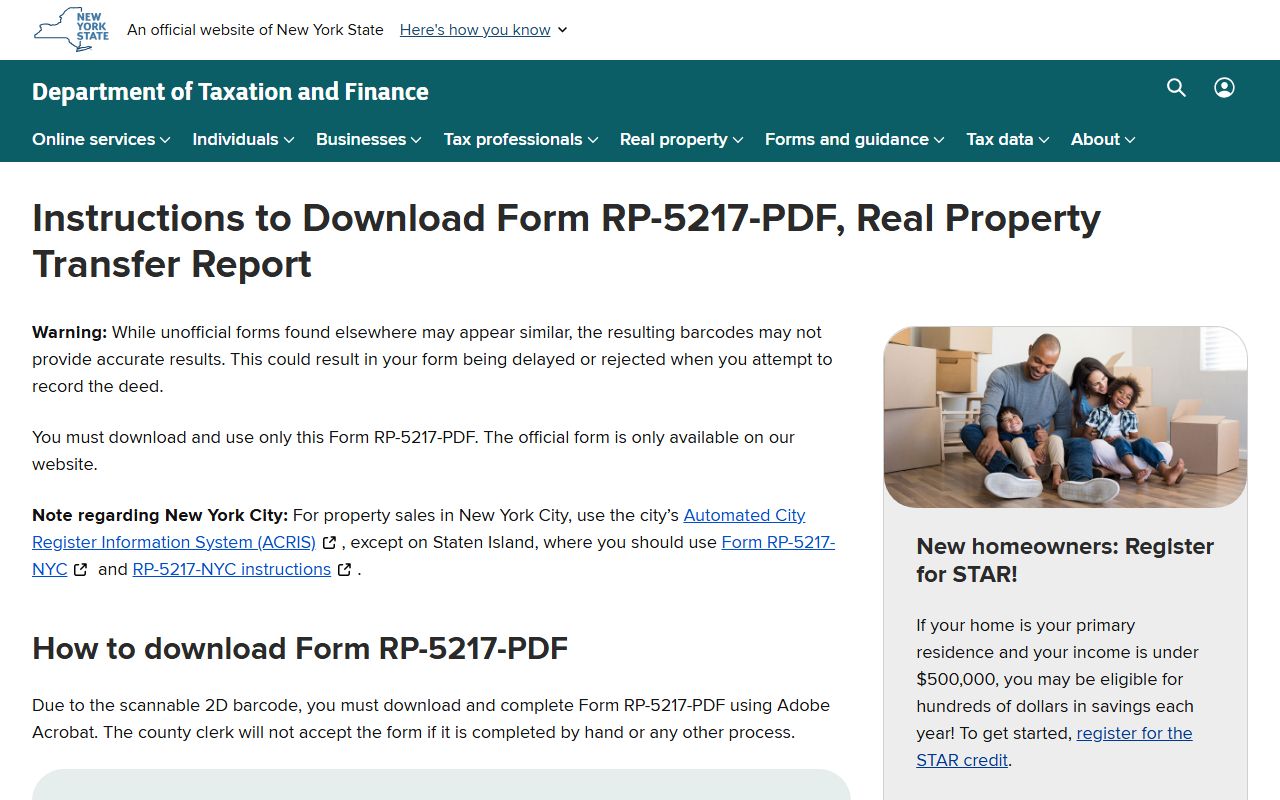
Every deed must come with two state tax forms. Form RP-5217, the Real Property Transfer Report, captures details about the sale price, assessed value, and property use code. This form must be computer-generated using Adobe Acrobat. The Department of Taxation and Finance warns that handwritten forms will be rejected by county clerks. The official form is only available on the Tax Department website. Unofficial versions found elsewhere may produce bad barcodes that cause delays or rejections. Form TP-584, the Combined Real Estate Transfer Tax Return and Credit Line Mortgage Certificate, handles the transfer tax side of things.
The deed itself must have original signatures with proper notarization. It needs a full legal description of the property. Names and addresses of all grantors and grantees must be listed. Documents should be printed in black ink on white paper, at least 8-point font, with no white-out corrections. Under New York Real Property Law, the County Clerk checks that documents meet recording requirements but does not rule on their legal validity. Many counties now accept electronic recording through services like Simplifile, CSC Global, and EPN.
New York Deed Records Fees and Costs
Recording fees across New York follow a general pattern. Most counties charge a base fee of $40 to $45 per document. A per-page fee of $5 applies to each page, and the County Clerk generates the cover page. Each additional name beyond two costs $0.50. Cross-references add $0.50 each. The RP-5217 form carries a fee of $125 for residential and farm properties, or $250 for commercial and vacant land. Filing the TP-584 form costs $5. As of March 2020, most counties also charge a $10 residential deed notice fee.
New York State transfer tax runs $4 per $1,000 of the sale price. Properties that sell for $1 million or more also trigger a mansion tax of 1% on the full consideration. Some municipalities in the state impose their own local transfer taxes on top of the state rate. Ulster County, for instance, has several towns with separate local transfer taxes.
Mortgage recording tax is more complex. The basic state rate is 50 cents per $100 of mortgage debt. Additional state taxes bring this higher. Counties within the Metropolitan Commuter Transportation District pay an extra 30 cents per $100. Local rates vary by jurisdiction. For homes used as a one or two-family dwelling, the first $10,000 of mortgage debt is exempt from the additional tax. Form MT-15 from the Department of Taxation and Finance lists current rates by location.
Copies of recorded deed records have separate costs. Most counties charge $0.50 to $0.65 per page for plain copies in the office. Certified copies run about $1.25 per page, often with a minimum of $5. Mail requests may cost more per page. Search fees of $5 for every two years can apply when records have not been scanned into the online system.
Getting Copies of New York Deed Records
Contact the County Clerk in the county where the property sits. You can visit in person, call, or mail a written request. Most offices handle walk-in requests the same day during business hours.
To get copies, you need the property address or section, block, and lot numbers. A party name and rough recording date also help narrow things down. Some clerks search by book and page number if you have that from an older document. Certified copies carry the clerk's official seal and are needed for legal proceedings or proving ownership. Plain copies work fine for personal research and title checks.
Many counties now offer online access to deed record images through their search portals. Registered users can view and print documents for a per-page fee. Westchester County, for example, has deed records online going back to 1680 through their Land Records Search. Nassau County's online portal lets you search by address or SBL number. Several counties also offer fraud alert programs that notify property owners when documents get recorded under their name. This helps protect against deed fraud.
For historical deed records, the New York State Archives holds older documents and provides research help. The New York State Library's Digital Collections includes historical property-related materials dating back to the 18th century. The Cornell Law Institute maintains a searchable database of New York statutes covering real property law. For current legislation affecting deed records, the New York State Senate website tracks active bills and recently enacted laws.
Property Taxes and Deed Records in New York
Deed records and property taxes are closely connected in New York. When a deed is recorded, the transfer data flows to local assessment offices. Assessors use sale prices from recorded deeds to calculate equalization rates and update property valuations. The property tax is a local tax in New York, raised and spent locally to pay for schools, police, fire, and road work. Counties, cities, towns, villages, and school districts all rely on it.
New homeowners who record a deed should look into the STAR program. If the home is a primary residence and household income falls under $500,000, the owner may be eligible for school tax savings. The Department of Taxation and Finance has a Homeowner Benefit Portal where you can register for STAR, check the status of your tax registrations, and see what benefits you qualify for. The Assessment Community section of the Tax Department website also provides tools for understanding how your property is assessed and what exemptions may apply.
Browse New York Deed Records by County
Each of New York's 62 counties has a County Clerk who maintains deed records. Pick a county below to find the clerk's contact info, online search tools, recording fees, and local resources for deed records in that area.
Deed Records in Major New York Cities
In New York, deed records are kept at the county level, not by city or town clerks. Pick a city below to find out which County Clerk handles deed records for that area and how to search them.